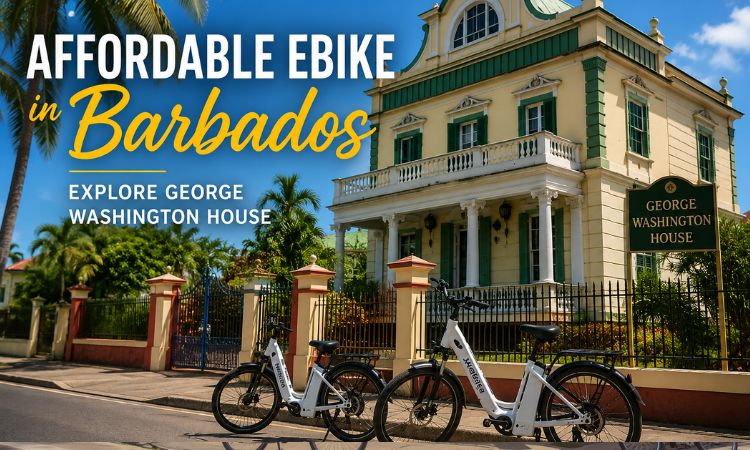

Barbados is often celebrated for its white-sand beaches and turquoise waters, but beyond the coastline lies a deeply layered history shaped by Indigenous cultures, colonial rule, sugar plantations, emancipation, and the journey to independence. From centuries-old churches and military forts to plantation houses and UNESCO-listed sites, the island offers a remarkable concentration of historical places within a relatively small geographic area. In recent years, e-bikes have emerged as one of the most enjoyable and sustainable ways to explore these heritage locations. They combine the freedom of cycling with electric assistance, making it easier to travel longer distances, handle hilly terrain, and stay connected with the surroundings.
Exploring Barbados’s historical places on an e-bike allows visitors to slow down, absorb local culture, and reach sites that are often missed when traveling by car or bus. The experience becomes not just about reaching landmarks, but about the journey itself—passing through villages, cane fields, coastal roads, and historic neighborhoods that tell their own stories.
Why E-Bikes Are Ideal for Exploring Barbados’s History
Barbados’s compact size makes it especially well suited for e-bike exploration. The island is approximately 34 kilometers long and 23 kilometers wide, meaning that many historical attractions are located within comfortable riding distance of each other. E-bikes remove the physical strain often associated with traditional cycling, particularly in Barbados’s warmer climate and rolling landscapes. Riders can enjoy gentle assistance on inclines, conserve energy, and focus on learning and observing rather than worrying about fatigue.
Another advantage of e-bikes is the flexibility they provide. Unlike guided bus tours that follow fixed routes and schedules, e-bike riders can linger at a site, explore side streets, or stop to speak with locals. This flexibility is especially valuable in historic districts such as Bridgetown, where heritage buildings, markets, and monuments are closely interconnected and best appreciated at a slower pace.
E-bikes also align well with Barbados’s growing emphasis on sustainability. As the island works toward renewable energy and environmentally conscious tourism, electric bicycles offer a low-emission way to experience cultural heritage without contributing to congestion or pollution around sensitive historical areas.
A Deeper Connection to Barbados’s Past
Traveling by e-bike fosters a stronger emotional connection to history. When riding past plantation ruins, historic churches, or former military roads, visitors experience the physical context in which historical events unfolded. The rhythm of cycling mirrors the scale at which people historically moved across the island, offering a more authentic sense of distance and geography than traveling by car.
For example, riding through the parish of St. George or St. John reveals how sugar estates were positioned in relation to windmills, great houses, and ports. Along the way, interpretive signs, village churches, and local stories add layers of meaning that can be overlooked at faster speeds.
Key Historical Places in Barbados That Can Be Explored by E-Bike
Barbados is home to dozens of historically significant sites, many of which are easily accessible by e-bike. While it is difficult to place an exact number on all historical places—since heritage includes buildings, landscapes, monuments, and archaeological sites—it is realistic for visitors to explore 25 to 40 major historical locations over multiple days using e-bikes, depending on route planning and pace.
Bridgetown and its Garrison, a UNESCO World Heritage Site, is one of the most important starting points. This area alone contains numerous landmarks, including the Barbados Parliament Buildings, Heroes Square, St. Michael’s Cathedral, the George Washington House, and historic warehouses along the Careenage. E-bikes make it easy to move between these sites while also exploring surrounding neighborhoods that reflect the city’s colonial and post-emancipation history.
Outside the capital, plantation houses such as St. Nicholas Abbey, Sunbury Plantation House, and Drax Hall provide insight into the island’s sugar economy and colonial social structures. Many of these estates are located along scenic inland routes that are ideal for e-bike travel, offering a mix of gentle hills, countryside views, and cultural stops.
Historic churches form another important category of sites. Barbados is often called the “Land of Churches,” and many of these structures date back to the 17th and 18th centuries. St. James Parish Church, St. John Parish Church, and St. Lucy Parish Church are notable examples, each reflecting different architectural styles and historical contexts. Visiting several churches by e-bike in a single day is both practical and rewarding, as routes between parishes reveal changes in landscape and settlement patterns.
Military and defensive heritage is also prominent across the island. In addition to the Garrison, sites such as Charles Fort, Needham’s Point, and remnants of coastal batteries can be explored along seaside cycling routes. These locations highlight Barbados’s strategic importance during the colonial era and offer dramatic views that enhance the overall experience.
How Many Historical Places Can Realistically Be Explored
When traveling by e-bike, visitors can comfortably explore five to eight historical places in a single day, depending on distance, time spent at each site, and terrain. Over a week-long stay, this translates to approximately 30 to 40 major historical attractions, not including smaller monuments, plaques, or informal heritage sites encountered along the way.
For shorter visits, even a two- or three-day e-bike itinerary can cover 10 to 15 significant locations, particularly when focusing on specific regions such as Bridgetown and the south coast or the plantation-rich central parishes. The efficiency of e-bikes makes it possible to see more in less time without feeling rushed.
Suggested E-Bike Exploration Themes
Plantation and Sugar Heritage Routes
This theme focuses on the economic and social history of Barbados. Riders can explore plantation houses, windmills, and former estate villages while learning about the sugar trade, enslaved labor, and the island’s transformation over centuries. These routes often pass through rural landscapes that remain closely tied to Barbados’s agricultural identity.
Colonial and Urban History Routes
Centered around Bridgetown and nearby parishes, this theme highlights administrative buildings, churches, military sites, and early residential areas. E-bikes allow riders to move seamlessly between dense urban streets and quieter historic neighborhoods.
Spiritual and Community Heritage Routes
This approach emphasizes churches, cemeteries, and community landmarks that reflect the island’s religious and social development. These routes often include opportunities to engage with local communities and understand living heritage rather than just preserved sites.
Practical Considerations for E-Bike Heritage Exploration
Comfort and planning are key to enjoying historical exploration by e-bike. Riders should plan routes that balance distance with time for interpretation and rest. Many historical sites in Barbados are well signposted, but pairing an e-bike journey with a heritage map or mobile guide can greatly enhance understanding.
Hydration, sun protection, and appropriate clothing are important, as Barbados’s climate can be warm throughout the year. Most e-bikes available on the island are designed for comfort and stability, making them suitable for a wide range of riders, including those with limited cycling experience.
The Cultural Impact of E-Bike Tourism in Barbados
E-bike tourism has the potential to support heritage preservation and local economies. Riders are more likely to stop at small museums, local shops, and community attractions, spreading tourism benefits beyond major sites. This form of travel encourages respectful engagement with history and promotes awareness of the island’s cultural assets.
By choosing e-bikes, visitors contribute to a model of tourism that values sustainability, education, and authentic experiences. This aligns closely with Barbados’s broader goals of preserving its heritage while adapting to modern travel expectations.
Conclusion
E-bikes offer an exceptional way to explore Barbados’s historical places, blending convenience, sustainability, and immersion. With the ability to comfortably reach 25 to 40 major historical sites over the course of a trip, visitors gain a deeper understanding of the island’s past while enjoying its landscapes and communities. More than just a mode of transport, e-bikes transform historical exploration into an engaging journey through time, making Barbados’s rich heritage accessible, memorable, and meaningful.